Table Of Content
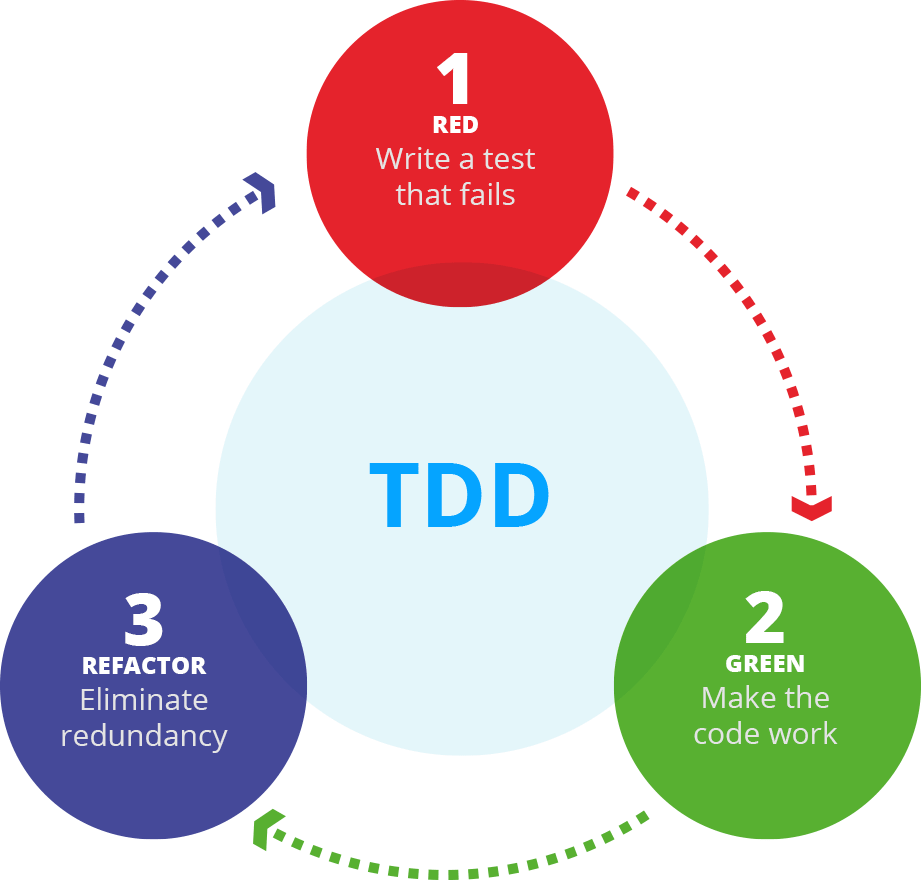
If the code doesn’t work as expected, then changes are made and the test(s) are repeated. These examples, challenges and frameworks illustrate the real-world adoption of TDD in Java projects. It’s important to note that TDD is not a one-size-fits-all approach and its success depends on factors such as team collaboration, project complexity and the willingness to embrace a test-first mindset.
Build your subject-matter expertise
These goals could be business results or functions like security, usability, maintainability, and other kinds of -ilities. Discover transformative insights to level up your software development decisions. Use code LIMITEDOFFERIDSBOSTON24 for an exclusive offer. In the above code snippet, a [test method] CanCreateGame() is written to see if a Bowling Game is created. Complex systems require an architecture that meets a range of requirements. A key subset of these requirements includes support for the complete and effective testing of the system.
Online Browser Testing
About a year later he demos TDD to Ward Cunningham at the OOPSLA conference. Benham did try working on an application without following TDD on a small project last year but ended up quickly regretting it. The process may sound slow and repetitive, but it’s actually this constricted aspect of the TDD process that appeals to many people, including Beck. The pillars of Agile are flexibility and collaboration, and TDD contributes to those pillars. TDD is iterative by nature, breaking down development into small cycles.
Development style
Refactoring doesn't just mean refactoring production code. And you may have noticed that there's some duplication in our test setup. When we're writing tests for the outside acceptance test loop, we're usually coding from the outside-in. When we're writing tests for the inner unit test loop, we're coding inside-out.
Test-Driven Development: Really, It’s a Design Technique
In the refactoring state, we focus on refactoring only. Focus on one thing at a time to avoid distractions becoming less productive. It’s better to do this instead of jumping ahead and spending a lot of time thinking about the whole implementation at once, which may lead us to overthink and cover cases that we don’t even require. Note that we start with a fundamental requirement or step then move on, step by step, until we finish the required functionality. This way, we have clear steps to complete, starting from the easiest to the complex. In this step, we need to run the test case again but this time to see a green bar.
The Test-Driven Development (TDD) Process
Some projects, teams, lifecycles, and codebases simply do not fit well in the TDD approach. However, TDD is worth trying in those situations where specifications might be flawed, missing, or otherwise lacking. Engaging stakeholders in defining test-first tests can be a valuable point of conversation on projects. First, the idea of a code specification is rare these days.
InfoQ Software Architects' Newsletter
This order is placed onbehalf of a customer, so the User object should be in charge. We can focus our vocabulary to fit within the tools that we use inimplementation. We can give a more test-driven phrasing of the example.
Unit testing focuses on unit functionality, while TDD also focuses on design and testability. And that is how unit testing becomes a part of test-driven development. TDD can lead to more modularized, flexible, and extensible code.
Who is in Charge of Quality in Software Development - InfoQ.com
Who is in Charge of Quality in Software Development.
Posted: Sun, 10 Feb 2019 08:00:00 GMT [source]
Expected Benefits
Developers then write enough code to make the corresponding tests succeed and then step back to evaluate their work, refactor and plan their next steps. Test-driven development is a powerful development practice that has become increasingly popular in recent years. By writing tests first and then developing code to meet those tests, TDD enables developers to create more robust and reliable software while reducing the time spent debugging and fixing issues.
(Tests are nothing but requirement conditions that we need to test to fulfill them). Test coverage is the percentage of code that tests cover to ensure that the code is thoroughly tested and that any potential bugs are caught early in the development process. Although some teams may be hesitant to forgo traditional unit testing, TDD drives code development, and every line of code has a corresponding test case. This means that unit testing is already built into the practice. Unit testing is performed in a loop on the code until requirements are met.
Do you wish to improve your software development skills and become a more efficient and productive programmer? Test Driven Development is an answer to all these questions. Test suite code clearly has to be able to access the code it is testing. On the other hand, normal design criteria such as information hiding, encapsulation and the separation of concerns should not be compromised.
He compares it to the traditional approach of coding first and testing later, something he calls "Debug Later Programming". He makes the point that bugs in code are unavoidable and therefore testing is essential. When a test fails in TDD, we usually know the problem since only small changes have been made. Developers could end up neglecting to test their code in important ways because tests are catering to the code and therefore guaranteed to pass. But in a lot of ways, the debate over the rightful place of TDD in software development is still ongoing.
Test-driven development ensures in this way that all written code is covered by at least one test. This gives the programming team, and subsequent users, a greater level of confidence in the code. ATDD is a communication tool between the customer, developer, and tester to ensure that the requirements are well-defined. ATDD does not, although automation helps with regression testing.
These test cases can be designed prior to the implementation starts, and should be implementation-independent. Test first way of test design is very important as efficiently supports defect prevention. Based on the application and the present test coverage further test cases can be created (but it is not test design).
There are plenty of agile teams that do not employ TDD. They prefer to write the code first, then test it the best they can, or hand it off to a tester, who tests it the best they can. The problem is that more often than not, the original specification is either inadequate or missing entirely. This leaves the developer to get clarification or to make assumptions about what is really desired. Another problem is that when code is the basis for a test, then if the code is wrong, tests may pass but still not verify that the original intent has been achieved.


No comments:
Post a Comment