Table Of Content

TDD helps develop the logic in the code in alignment with the requirement and helps deliver code with minimum bugs. With the simplest functionality, first, you guide your logic to build up the functionality. This helps to break a problem down into smaller pieces and helps in the problem-solving process. When writing the code, it is important to keep it as simple as possible. The code should be easy to understand, and it should not include any unnecessary complexity.
Write for Us
Once again, for a more complete example, please refer to Kent Beck’s book, Test-Driven Design by Example. Behavior-driven development (BDD) with its “Given, When, Then” structure gets closer to expressing and understanding what is needed more specifically. Plus, BDD lends itself to automation in the Gherkin language. For example, if the code is inefficient, the performance will often be less than desired. SOLID principles (Single Responsibility, Open/Closed, Liskov Substitution, Interface Segregation, Dependency Inversion) are design principles that promote maintainable and flexible code.
Test-Driven Development Cycle
The foundation of TDD is using small tests to design bottom-up in an emergent manner and rapidly get to some value while building confidence in the system. Salman works as a Digital Marketing Manager at LambdaTest. With over four years in the software testing domain, he brings a wealth of experience to his role of reviewing blogs, learning hubs, product updates, and documentation write-ups. While Test Driven Development is a powerful technique for software development, there are some common pitfalls that developers should know.
What is Test-driven Development? A Complete Guide To TDD
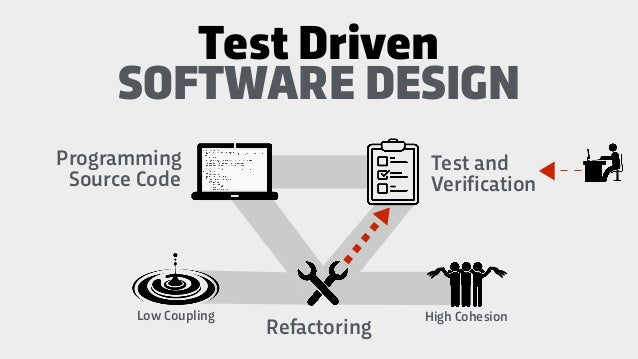
Refactoring may occur but might be a separate step and not as integral to the development process. Tends to lead to cleaner and more modular code, as developers need to design code that is easily testable. TDD is a continuous, iterative process of improving code through tests. To do TDD, simply follow the mantra of Red - Green - Refactor cycle. Some may call it Fail - Pass - Refactor, but it’s all the same thing. It is the process where not a detailed specification of software/system is done but exploring the requirements of software/system which defines the overall strategy of the project.
We are currently not paying attention to simple design, refactoring, or having good code. To achieve high test coverage, it is important to write tests that verify the code's behavior and cover all possible code paths. This helps to ensure that the code is working as intended and that any changes to the codebase do not break existing functionality. To fully benefit from unit testing and TDD, automated unit test tools should be used to automate tests. Automating tests is critical for continuous integration and is the first step in creating an automated continuous delivery pipeline. Agile teams frequently use TDD methodologies like Test-Driven Systems Development, Acceptance Test-Driven Development, and Behavior-Driven Development.
So, it is always an advantage to use unit testing for an existing codebase to test. For a developer with prior experience with unit testing, TDD is a boon. Along with the test first strategy, the code is also refactored to fix the failing test scenario. So, TDD is a combination of Test First and Refactoring. The level of coverage and testing detail achieved during repeated TDD cycles cannot easily be re-created at a later date.
Test First Approaches With Test Driven Development and Behavior Driven Development - InfoQ.com
Test First Approaches With Test Driven Development and Behavior Driven Development.
Posted: Thu, 07 Jan 2016 08:00:00 GMT [source]
At first, this test might be just a comment in the code as a To-Do item or a statement that may not even run or compile. TDD as we know it today was codified by Kent Beck in his 2002 book, Test-Driven Development by Example. The concept of TDD is to develop a set of tests or assertions that describe the desired functionality to be developed before coding begins. We look at foundational principles, then see an example of how to apply TDD. As Agile software developers, we should value feedback, exposing bad design and uncertainty as early as possible.
Example of TDD
Benham compared TDD to the catches on the bottom of roller-coaster cars, which allow cars to fly down hills but ensure they don’t fly off entirely. They thought it wasn’t useful to them and that practicing TDD just felt like a chore. Others who enjoyed TDD suddenly found themselves in the unfamiliar position of playing defense, years after TDD had started to become an accepted part of agile development. Agile development demands regular feedback to develop the expected product. In simple terms, one can also term Agile development as Feedback Driven Development.
From this point on, we will follow the consistent process of red to green to blue. We pass the first point of TDD, the red state, by writing a new requirement or a step of a problem as a failing test case, and follow on until we complete the whole functionality. Removing unused code is one of the primary, simple refactoring methods, which increases code readability and size of the class, thereby the project size, too.
Thus, everyone arrives at a common understanding of what's to be built. In 2010, Park and Maurer review the literature on STDD. Brian Riley, principal engineer at digital development consultancy Carbon Five, has been practicing TDD since 2009.
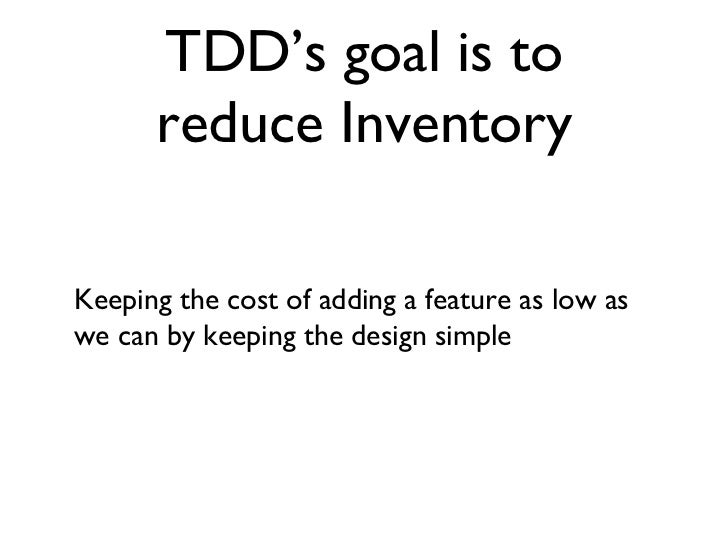
I have managed the project to have a commit for each TTD red/green/blue change, so when navigating commits we can notice the changes and the refactoring done toward final project requirements. The goal is to prevent developers from writing superfluous code that’s unnecessary for the delivery of value. It’s about writing the least amount of code needed to solve the problem. Unit tests are the smallest building blocks of a set of tests.
Therefore, unit test code for TDD is usually written within the same project or module as the code being tested. There are various aspects to using test-driven development, for example the principles of "keep it simple, stupid" (KISS) and "You aren't gonna need it" (YAGNI). Conversely, test-driven design shines when the implementation is easy, orwhen the language you’re working with provides ergonomics for sketching outimplementation. The tests drive the data forward, and ultimately you’redone with the data when the tests pass. The result of the test design is a set of test cases based on the specification.
There will often be other tests as well, which also may start as specific, yet rough, statements. We've covered about 70% of the essential theory for TDD so far. One of the goals in this introduction is to show you the big picture of TDD and how it's used to develop software from start to finish. In the real-world, a good testing architecture typically involves more than one type of test. I can tell you from experience that this is not a fun situation to be in— thousands of lines of code into a project with no tests and no safety. It's a great way to turn a promising codebase into an unstable mess.
This code should be written to pass the test and nothing more. This helps ensure that the code is focused on the specific functionality being tested and is not overly complex. The first step in the TDD process is to write a test that verifies the code's behavior. This test is written before the actual code is written and must fail before the code is written. This ensures that the test is valid and tests the correct behavior. Tests become part of the maintenance overhead of a project.


No comments:
Post a Comment